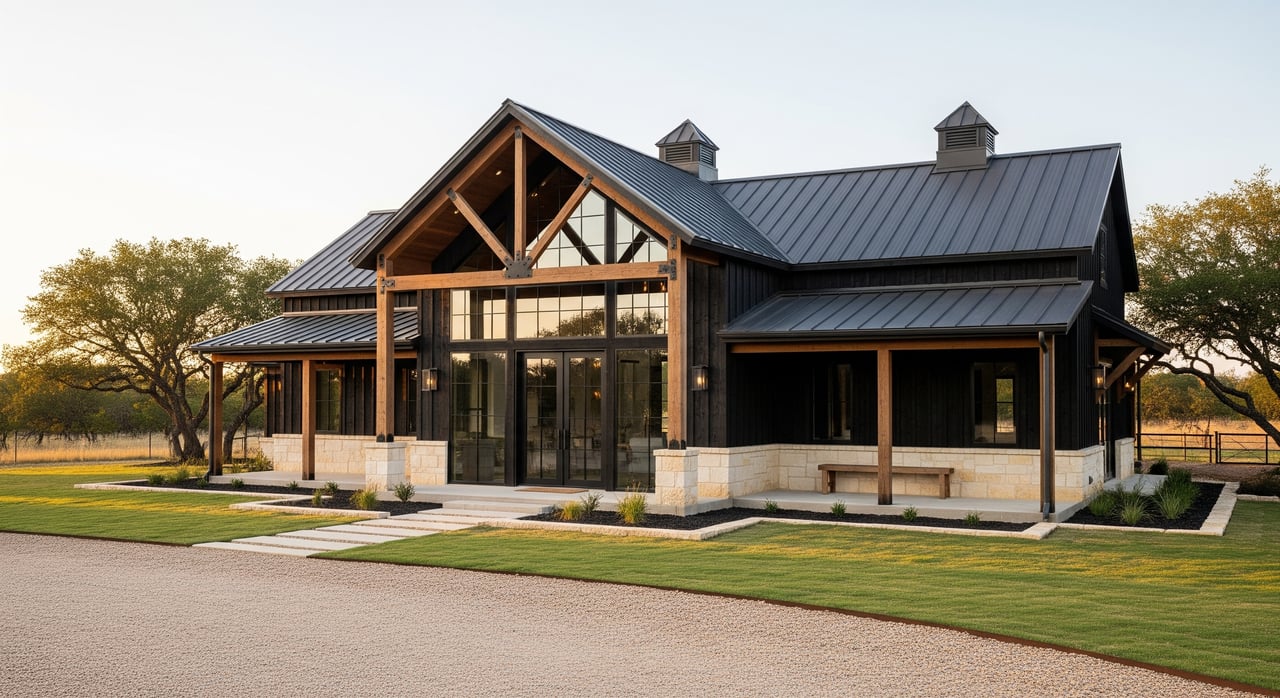
Thinking about a barndominium in Magnolia but not sure where to start? You want room to spread out, a shop or garage that actually fits your life, and a home that feels simple to maintain. The path is different from a standard suburban build, so the right plan matters. In this guide, you’ll learn the local rules to check, key build decisions, financing and insurance basics, and a practical checklist to move forward with confidence. Let’s dive in.
What a barndominium really is
A barndominium is a home that uses barn-style or farm/industrial building systems as its primary structure. You’ll see three common forms in the Magnolia area:
- A metal building shell with finished living space inside.
- A post-frame or pole barn structure finished as a home.
- A converted traditional barn adapted for residential use.
Most buyers love the open floor plans, tall ceilings, and flexible layouts. The big shop or garage space is a major draw for hobbies, equipment, or vehicles. Shell costs can be competitive, but total cost depends on your finishes, utilities, and site work.
Magnolia rules and site checks
Local rules can vary street by street in and around Magnolia. Always verify city, county, and recorded restrictions before you buy or build.
Deed restrictions and HOAs
Many acreage subdivisions and rural communities use covenants that control how homes look and function. These may set minimum home size, limit visible metal exteriors, or regulate outbuilding size and placement. Some also address livestock and agricultural use.
- Ask for recorded covenants and restrictions early in your search.
- Review any HOA guidelines, plat notes, and easements.
- Confirm whether metal siding or roofing is allowed and if masonry is required.
Zoning and permits
Parcels inside the City of Magnolia follow city development standards. Unincorporated properties in Montgomery County follow county rules and applicable residential building codes. If you build a structure as a “shop” first and convert later, you may trigger extra permits and inspections.
- Contact the City of Magnolia Development Services for in-city parcels.
- Contact Montgomery County Development or Permitting for county parcels.
- Expect permits for building, electrical, plumbing, HVAC, and septic or well where applicable.
Septic, wells, and utilities
Many rural sites rely on on-site sewage and private water. Soil and site conditions drive what’s allowed and what it will cost.
- Septic: expect soil testing and a permit process that follows state and local health standards.
- Wells: drilling is regulated and output can vary by location and depth.
- Power: large shop equipment and open-plan HVAC loads can increase service needs. Check proximity to transformers and any costs to extend service.
Request any available site utility records, and build contingencies for feasibility studies into your contract when possible.
Floodplain, drainage, and environment
Floodplain status influences insurance requirements and site design. Even on higher ground, drainage rules can shape how you place your home, shop, driveway, and septic.
- Check FEMA flood maps for Special Flood Hazard Area details.
- Ask the county floodplain manager about local rules and elevation needs.
- Plan driveways, pads, and leach fields with runoff in mind.
Livestock and land use
If you plan to keep animals or run an agricultural operation, verify local ordinances and setbacks. Some rules may address stables, manure management, and the number of animals allowed on a parcel.
Build and design decisions
Barndominiums work best when structure, foundation, and finishes are planned as a system. Get engineered plans early and insist on code-compliant design.
Structure types compared
- Metal building systems: clear spans and rapid erection are strong advantages. You’ll need thoughtful insulation and condensation control. Interior finishing to residential standards adds complexity.
- Post-frame construction: cost-effective for large footprints and easy to modify. Maintenance and finish options differ from steel.
- Converted barns: unmatched character and reuse of existing structures. Expect upgrades for structural, insulation, and code compliance.
Foundations and engineering
Slab-on-grade is common, but piers and beams or slab with footings may be recommended depending on soils. Local wind-load requirements apply even inland in Montgomery County.
- Require engineered foundation and building plans specific to your site.
- Verify wind-uplift connections and code compliance in all bids.
- Coordinate foundation details with your chosen building system.
Insulation and climate control
Metal shells can sweat without the right plan. Moisture control, insulation, and ventilation should be designed together.
- Spray foam reduces thermal bridging and helps with condensation.
- Insulated metal panels offer an integrated shell solution.
- Consider zoned HVAC, mini-splits, or insulated interior partitions for large open spaces.
Popular layouts and site planning
Buyers around Magnolia often combine a generous shop or garage with attached living quarters. Common elements include a loft overlooking the great room, a mudroom near the shop entry, and wide porches for shaded outdoor time.
- Map your driveway and equipment turnaround early.
- Reserve space for septic and leach fields away from drive and shop pads.
- Plan for future barn or guest suite additions when placing utilities.
Choosing the right builder
You may hire a metal-building erector for the shell and a residential contractor for interiors, or one design-build firm for everything. Either way, experience with barndominiums matters.
- Verify insurance, licensing, and recent barndominium references.
- Request itemized bids separating shell, foundation, utilities, finishes, and site work.
- Get a realistic timeline tied to inspections and utility hookups.
Cost drivers to budget
Your final price depends on more than the shell. Plan for the pieces that add up.
- Shell type and customization level.
- Foundation design and any soil remediation.
- Kitchen and bath finish level, flooring, and trim.
- Utility extensions, transformer needs, and septic or well installation.
- HVAC sizing for tall, open volumes.
- Local labor conditions and permit costs.
Financing and insurance in Montgomery County
Financing and insurance for barndominiums can look different than for a traditional single-family home. Start these conversations early.
Financing paths to consider
- Conventional mortgage: possible if the home is treated as a standard residence on a permanent foundation and meets lender underwriting.
- FHA and VA: may work if the property meets program standards and the appraiser and lender accept the construction type.
- Construction-to-permanent loans: common for custom builds that convert to long-term financing at completion.
- USDA Rural Development: may be available if the location and borrower meet program rules.
- Portfolio and credit union options: some local lenders tailor loans for non-standard homes.
Ask each lender if they have closed barndominium loans before and what inspections or documentation they require. Clarify appraisal expectations early.
Appraisals and comparable sales
Appraisers need comparable sales that make sense for the property. Where barndominiums are less common, they may lean on a cost approach or a mix of nearby comps.
- Discuss appraisal strategy with your lender before you lock a budget.
- Build flexibility into your plan if comps are limited.
Insurance considerations
Insurers may classify your home by framing and exterior type, which affects underwriting and replacement cost. In Montgomery County, wind and hail exposure and potential flood risk are important factors.
- Confirm that your insurer accepts metal or steel construction.
- Match your policy’s replacement cost to your actual structure and finishes.
- Add endorsements for wind or flood where needed, and review liability limits if your shop activities or livestock increase risk.
Magnolia buyer checklist
Use this checklist to keep your due diligence on track.
- Title and Restrictions: obtain recorded covenants, restrictions, easements, and any plat notes.
- Zoning and Permits: confirm city or county rules and permit path for your parcel.
- Utilities: verify power, water, and gas availability and costs; confirm septic and well feasibility.
- Flood and Drainage: check FEMA maps and county floodplain status; order an elevation certificate if needed.
- Soil and Site: schedule soil testing for septic and order a site survey with topography if constraints exist.
- Engineering: secure engineered plans for the building and foundation that meet local wind loads.
- Builders: vet insurance, references, warranties, and itemized scopes with timelines.
- Financing: prequalify with lenders who finance barndominiums; confirm appraisal approach.
- Insurance: obtain early quotes and required endorsements for wind, hail, flood, and liability.
- Timeline: plan allowances for weather, inspections, utility extensions, and delivery lead times.
Next steps with a local partner
A successful barndominium in Magnolia starts with clear guidance. You benefit from a team that understands acreage, permitting, utilities, and builder coordination specific to Montgomery County. If you want a calm, step-by-step process from land search through closing, our boutique approach is designed for you.
Let’s talk about your goals, timeline, and budget so you can move forward with confidence. Connect with Integrity Texas Properties for local-first representation tailored to barndominium and acreage buyers.
FAQs
Will a lender finance a barndominium in Magnolia?
- Sometimes. It depends on lender policies, how the property is classified, the permanent foundation, and appraiser familiarity. Speak with lenders who have closed barndominium loans before you commit.
Can I use an FHA or VA loan for a barndominium?
- Possibly. The home must meet program minimum property standards and underwriting, and the lender and appraiser must accept the construction type.
Are barndominiums cheaper than conventional homes?
- Not always. Shell costs can be competitive, but total price depends on foundation, utilities, insulation, HVAC, and interior finishes.
Do deed restrictions in Montgomery County allow metal exteriors?
- It varies by subdivision or parcel. Some covenants require masonry or limit visible metal. Review recorded restrictions and HOA rules before you buy.
Is it hard to insure a metal-framed barndominium?
- Insurers differ. Framing and exterior materials affect underwriting and replacement cost. Get quotes early and confirm wind, hail, and flood coverage needs.
Is a barndominium a good fit for Magnolia’s climate?
- Yes, with proper insulation, moisture control, and right-sized HVAC. Spray foam, ventilation, and zoning strategies help manage heat and humidity.